The “Ripple Effect” — On Character and Story Quest Design: A Murloc's Concise Handbook of Narrative and Quest Design, Part V
How do you design a character that players actually remember?
Introduction
Ripples are a very ordinary physical phenomenon.
Something enters a still body of water. It splashes, and ripples spread. The stillness is broken. One ripple follows another until the surface settles, waiting for the next disturbance.
We often describe the sudden arrival of an event or a person as “breaking the peace of my old life.” Which suggests that we can relate the way we encounter people and events to this same phenomenon:
- You see someone for the first time. Your mind forms an impression from what you already understand and the information now available to you.
- If you’re lucky, you then go through something together. What happens tests your ideas about that person or thing.
- You form a new impression, a new understanding: a conclusion reached by experiencing an event and taking part in something with this person.
- If they interest you, you go on observing them in different situations and settings. Their behavior further supports your impression. You feel as though you’re gradually getting to know someone.
- Once you think you know them fully, you can naturally talk about that person or event with other people.
Establish an initial impression → test it through an event → reinforce it through the smaller things that happen afterward → arrive at a result.
It’s much like a ripple. A stone that creates an event drops into the water of your understanding. There is a splash. The ripples that follow keep telling you about the event and the person. By the time they all fade, a result has taken shape.
It all seems very natural. This is how many game characters find their way into players’ hearts. When players say, “As things happened, I gradually got to know this character,” this is the process they’re describing.
But rein in your imagination for a moment. Unfortunately, you now have to think as a creator. You’re the person responsible for making these ripples happen.
What do you do now?
Create the water. Create the stone.
Look at the character in front of you, and perhaps the outline the writer finished a few days ago. These are the sources of your first impression.
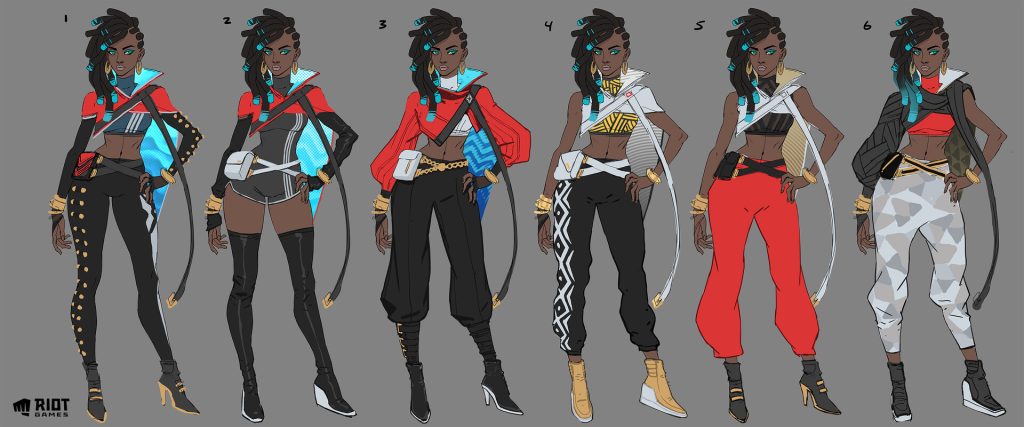
The character may have started in an artist’s hands, before the writer racked their brains and exercised their ability to make up a story from a picture, producing a character description.
You’ll have a few immediate ideas: the character’s appearance, distinctive visual elements the artist has designed, the background the writer has given them, their faction, their weapon, the way they might behave…
This is the moment you form your first impression. It’s also the moment you’re closest to what the player imagines. Before encountering the story, all your players have seen is the character’s appearance and introductory cinematics, heard the voice actor’s delivery, and noticed the circumstances in which the character appears.
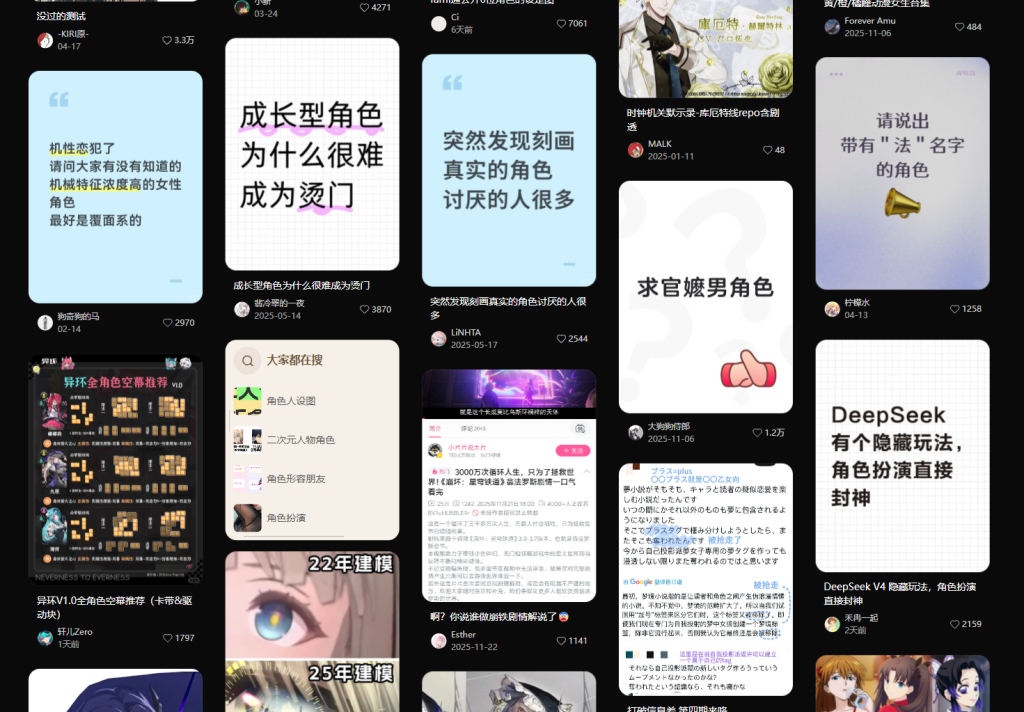
Look at player feedback in certain corners of the internet and, honestly, it’s pretty much like this… The collage includes requests for strongly mechanical female characters, questions about why characters who grow are rarely fandom favorites, complaints that realistic characters attract dislike, and requests for male characters whom even the official material treats as “wife” material.
For the player, this is when the basic impression forms. Think of watching TV dramas with your family as a child. A new character appears, and your parents decide whether they’re good or bad from a few lines, a few actions, and the atmosphere and sound accompanying their entrance. Even the following day, over meals or casual conversation, they’ll use the impression formed in that moment to discuss what they know about the character and whether they like them.
As the creator, your job now is to catch that thought as it flashes into being.
Write it down with pen and paper, or start discussing it with the writer, just as your relatives did when you were little.
Generally, you yourself represent one kind of player for the game you’re making. You have tastes and a player profile of your own. You can identify the point where your response to the character connects with that audience. If you’re good enough at imagining other people’s perspectives, you can even put yourself in the place of players you know, or imagine for your game, and produce a few more immediate impressions.
What you and the writer need to establish now is whether that stereotype represents how most people will see the character.
A character design rarely satisfies everyone. There will always be picky people, or people who like finding an angle of their own, ready to pass judgment. They will have different perspectives and different ideas.
But unless your writing partner is Neil Druckmann and the two of you intend to make some grand work of narrative subversion to demonstrate how profound you are, for the sake of doing your job, you should probably give the character a stereotype that works for the broadest shared part of your audience—your “greatest common divisor.”
Together with the writer, establish that stereotype, the outward picture the character presents, and where they’ll first appear. You can overturn the stereotype, but doing so needs enough attention. You can also use what draws attention to set up a narrative reversal. An elite professional who appears to spend every day doing nothing, just trying to slack off and get work over with, might later reveal the exact opposite personality. Give them sufficient reasons and motivations, and you can make that design work.
Once you’ve created this “beauty in the eye of the greatest common divisor,”1 start thinking about what the character would do from that angle, and how they’d behave. The writer needs to start designing characteristic lines, a way of speaking, verbal habits. Both of you are serving that initial stereotype, working it into the image the character presents at your first meeting.
Eventually, you may introduce it at some point in the main story, in the latter half of an event story, or somewhere else entirely. You’ve now completed the first step in creating ripples. Next, you need the event that will strike the water.
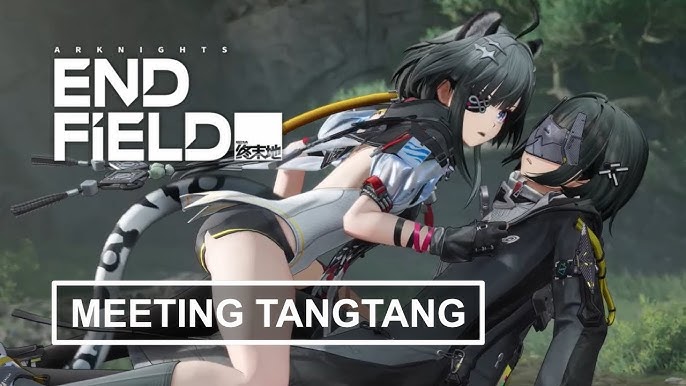
Tangtang’s part in the main story, for instance—our “Counselor Tang”—really could count as one enormous prologue to her personal story…
How do you throw the stone?
This is the part where you have the most freedom, so I’ll pin down just a few broad rules, then explain why.
Generally, you and the writer need to follow these principles:
- The player must take part in the story. If necessary, they should become the catalyst that lets the character reveal their true self.
- Bring in the existing impression, then consider how to reinforce or reshape it.
- Whatever you do, emotion needs to be the story’s main direction or driving force.
- Control the pacing. Save the time for reflection for afterward.
First, we need to recognize a problem. Compared with the main story, a character’s personal storyline rarely has room for the same vast, intricately nested structure.
Realistically, you won’t get that many resources. A team with that kind of capacity will usually put the material into the main story. Besides, once a story becomes long and complicated, the player’s attention may drift away from the character. You can end up creating an elaborate story instead of a character people like.
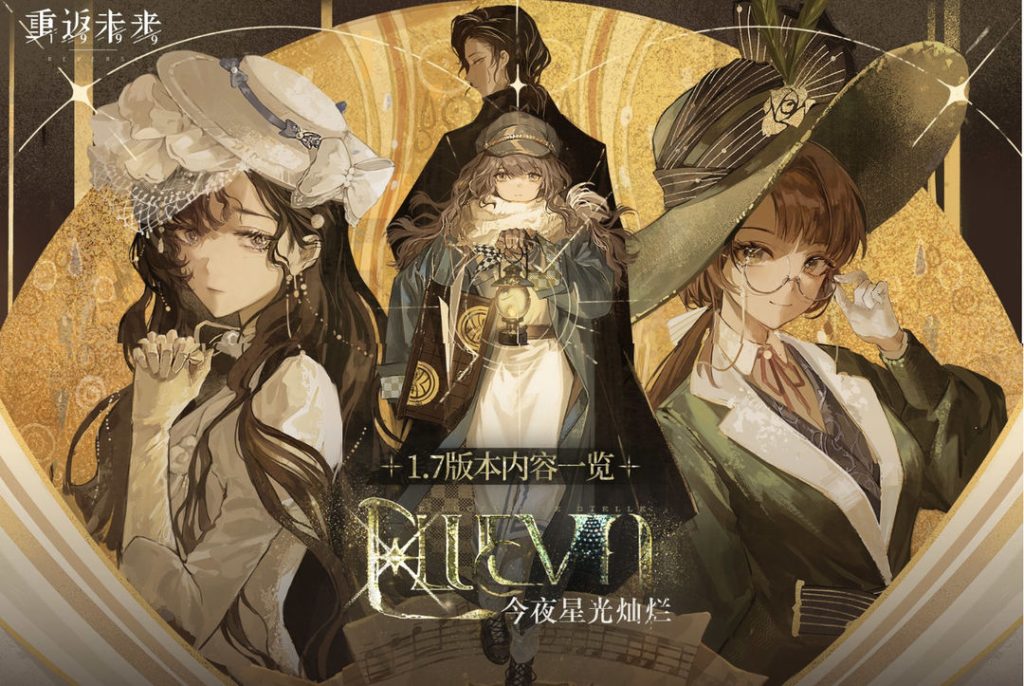
After all, the stories a team is willing to lavish that much attention on generally get promoted into the main plot. Pictured: Reverse: 1999’s Version 1.7 overview, “E lucevan le stelle.”
So a character story probably isn’t the place for your own The Man Standing Next, Full Metal Jacket, or War and Peace. The player may be drawn to your ingenious structure, but eventually, they’ll also lose patience.
What you need is a story the player participates in and witnesses throughout, developed from the character’s deeper impression and theme. Design your quest flow and narrative content around that, too.
From the story side, of course, it depends on what theme the writer wants to explore through this character. That comes down to their thoughts and feelings about the character, and their state of mind at the time. Perhaps they want a narrative with a sharp contrast, and give an assassin a story like Kikujiro. Perhaps they’d rather stay within expectations, and a character with a military background gets a Bourne-style story…
You can also put yourself in the place of that broad audience you share. What kind of story would they expect from this character? What would they instinctively imagine about them? You could even start with the games these players most often discuss or play, or the gameplay that immediately springs to mind when they see the character’s combat mechanics. Use those existing associations to find a story theme.
If your character feels like a tribute to Leon S. Kennedy, why not actually design a Resident Evil-style story and narrative experience? Creating in line with expectations is still creation. It can still reinforce the player’s image of the character.
But remember: the important part of a ripple isn’t the stone hitting the water. It’s what happens after the stillness has been broken.
Ripples—or, as many players call them, “after-sales service”
Now we have the initial stereotype and the impression you’ve reinforced or reshaped through the story. Your players are still immersed in the emotions you and the writer created. They haven’t quite come out of it. They’re slowly calming down, thinking. Perhaps they’re aimlessly scrolling through reaction videos about that story, or looking for a chance to speak to the character alone in the game.
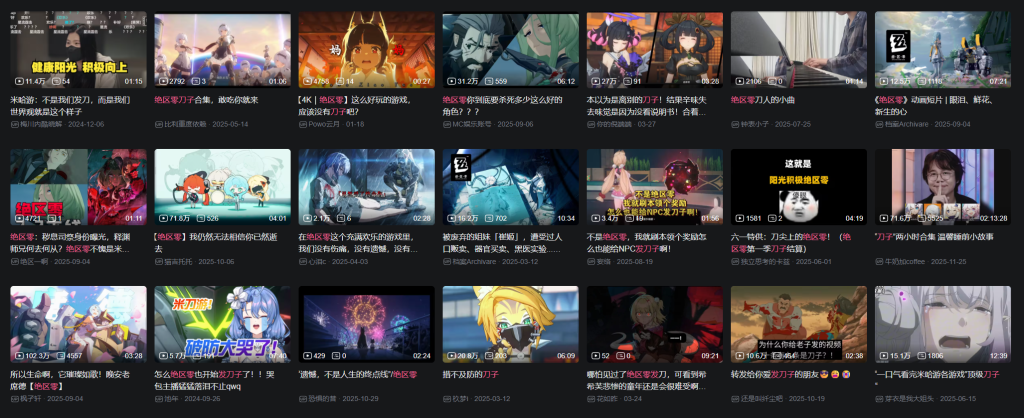
Watching different streamers get stabbed by the story, for example. “Knives” is the community’s term for moments of emotional pain; the collage is full of ZZZ “knife” compilations and reactions.
This is where your effort can really count: helping move their thoughts forward, both what they think about and how they get there.
We know that the most powerful part of a story’s emotional knife often isn’t the moment it strikes. It’s what comes afterward: the “devastating final stab” players love talking about.
But have you ever considered what that final stab actually consists of? We can put the question more sharply: why are so many tragedies easier for players to remember?
Usually, thanks to the way we’ve designed the earlier sequence, by the time players reach the ripple stage, they’ve taken in the character and story in a hurry. They don’t necessarily understand the character fully. They still have only pieces, and the emotions the narrative has stirred.
And among all our complex human emotions, those in the two quadrants of pain and joy form the strongest poles.

Extreme emotions are highly contagious. Pain spreads especially strongly.
Because your story has been built for that shared audience, it’s relatively easy to anticipate how their emotions will change. As the writer, you know where you’ve put the knives. You can imagine which players they’ll pierce, and how those players will respond.
Meanwhile, with the resources of modern game production behind you, making a player cry when narrative pacing is leading them along is… honestly, pretty easy. You have the voice actors’ performances; just the right music at a crucial moment; the story beats you and the writer have designed; the emotional pacing you’ve shaped across the quest; a setting full of conflict; and a character who seems a little powerless within it, who must sacrifice something to strike one desperate blow. Compared with keeping the player happy throughout, tragedy really is easier to shape, and easier to make unforgettable.
The ripple stage is where you design how the character changes after going through those events.
Any change can become a design element: a changed appearance after the event; an epilogue; new everyday behaviors or animations; new everyday conversations; lines for the character’s entrance, their presence on the field, or their death; even gestures in other stories. All of these can become the character’s aftereffects at this stage.
But here, you and the writer can easily make a mistake. You designed the material that players will interpret. Your job is to supply more elements they can interpret, elements that reconnect them with the emotions they felt during the story. Your job isn’t to join the players in picking the character apart. Don’t start analyzing your own character from the player’s position. You’ll fall into a spiral of proving your own reading right, creating reasoning that’s either too repetitive or too extreme to connect with, just to manufacture an interpretation that looks distinctive.
As a quest designer, think of yourself as the butler welcoming visitors on a castle’s open day. The character is your employer. You need to arrange enough puzzles for the guests to learn more about them by solving those puzzles.
Think about how to give the character material that can be interpreted at this stage. Deliberately create moments that invite a reading.
Take the tragedy we discussed. One of the most common—and most economical—approaches is to let a character who has emerged from the shadows look back on who they were during the event. This is why I asked you to control the pacing and avoid leaving time for the player to dwell on the story while it’s still unfolding. You want to guide that reflection now, so the character’s answer becomes the conclusion of the player’s own thinking.
The deeper the tragedy, the more this reflection will feel like the character opening their heart.
Of course, tragedy isn’t the only thing worth creating. There are many ways to do this. The ripples of an everyday comedy might take the form of symbolic objects: a reward you earned together, an item, even a special way of greeting each other. As long as it brings back the story’s emotion, the ripple has worked. And please note: it needs to bring back what the player felt while experiencing the story, not just what happened in it. Those are worlds apart. Remember that!
Chain reactions
This part is optional. It depends on the disturbance your stone made, and on your ripples.
We know that the result of one event can affect another in some way. That’s also why we want to use this method to convey an understanding of the character.
You’ve already established the player’s impression of the character: how they behave, what they’ve been through, even their relationships.
A chain reaction is a casual little touch in a later story involving that character.
Its purpose is simple: make your world and characters feel fuller.
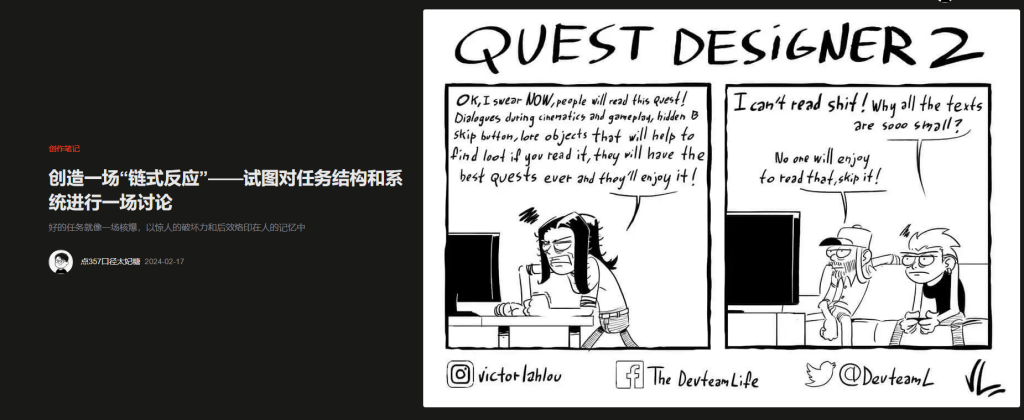
I’ve written about designing chain reactions in quests before. Ripples approach the idea more from the story side.
In your narrative design, these characters have a past the player can examine, because they’ve experienced it together. That gives the characters’ present behavior reasons the player can trace. A new story can conflict with those reasons and generate further narrative. A character who has worked through pain might later use their own approach to help someone going through something similar. An optimistic, cheerful character might suffer a major upheaval and begin doubting themselves, waiting for the player who once shared their happiness to talk them through it.
The aim of a chain reaction is depth. So the more characters have stories behind them, the greater its aftereffects can become.
Players who’ve been through those events also enjoy seeing the characters grow. Remember what we said earlier: what the character thinks about becomes what the player thinks about?
When a character grows this way, their influence on others through the chain reaction becomes the impression the player leaves on those characters within the story. Because the character thinks as the player does, the player begins to see them as a representative, acting on their behalf in the game world. And what a player with such a representative most wants to see is their understanding making a wider difference to that world.
To witness other characters grow, just as the character they love has grown.
A little plain talk
I know that by now you may have a question: won’t designing this way make future NPC stories all look alike? Won’t it become formulaic?
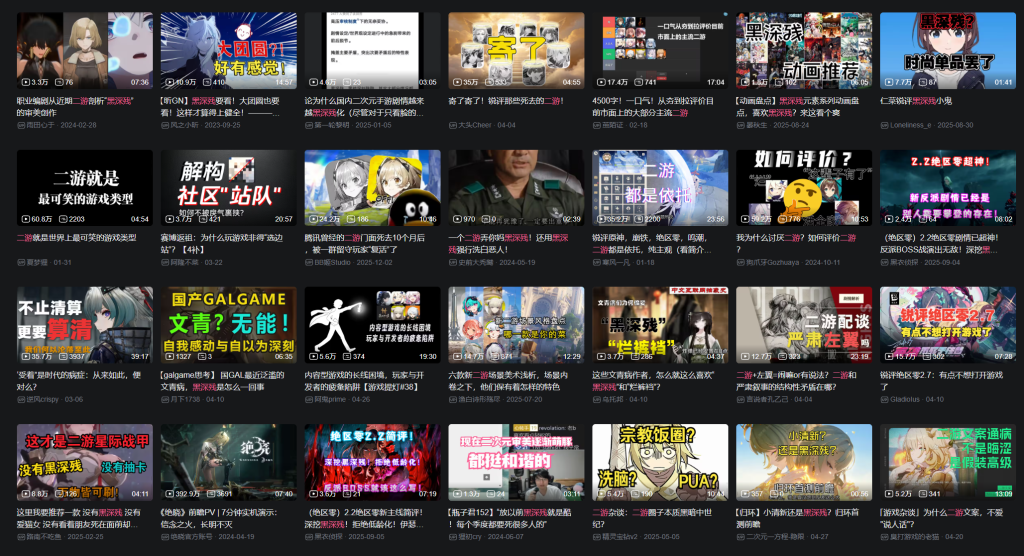
A collage of community debates about anime-style games, dark stories, happy endings, and whether narrative choices have become formulaic.
First, let’s return to the biggest variables in everything above: you and the writer, as creators, and your audience.
Human emotion is extraordinarily complicated. Pain and joy aren’t the only two quadrants available to work with. I know you’re going to ask why I haven’t mentioned anger. Before you do, I suggest you take another look at the great sage Neil and his The Last of Us Part II.
Everyone’s experiences, knowledge, and past affect how they understand a character. They affect your reading of the character’s profile and the scenes you design around them. Your writer will have ideas of their own, too. Perhaps she wants to challenge herself with an emotional angle that’s difficult to design. Perhaps she has a special attachment to the character and wants to express a particular feeling hidden within them.
Everyone expresses emotion differently. The beats may resemble one another, but unless you’re deliberately copying, it’s generally hard to make them truly formulaic.
On the other hand, if you feel you can’t come up with much, or all you have in your head is a formula, I’d suggest watching some films and reading some novels at this stage. Think of it as setting the tone. Take a work you know well as a foundation, and refer to the feeling it gave you when shaping your narrative’s emotions. The scenes and the characters are new.
This can help you quickly find the emotion you want to design and the shared audience response to aim for. It’s useful when you have no ideas at all. If you already have an idea, though, taking in complex new material may overload your mind or carry your emotions somewhere else. In that case, pin down your feeling as soon as you can. You can always look for references afterward.
And this work doesn’t belong to the writer alone. Whether you’re creating the character, throwing the stone, or designing the moments that create ripples, you can work together. Writers usually rely on words as their medium, or on story scenes that aren’t built around a playable experience. Your task, when you understand what they’re reaching for, is to consider how to express it through the narrative language of games.
At this stage, you aren’t merely supplying one perspective on your first impression of the character. You can develop scenes from the shared theme and impression you’ve both found for your audience. Perhaps the writer has thought of a story climax. You start thinking about how quest flow can achieve that emotional climax, what other scenes and content it needs, what the character will experience and why, and whether another character who’s already been through this process should help. That also means judging whether the emotional moment reaches the intensity you both want.
After the main story is complete, you still need to design its ripples. Do they belong within the character story itself, as an epilogue or continuation? Or should they appear elsewhere in the character’s content, in small affinity quests or everyday encounters? What content should they create, and what Effects should they have?
Ultimately, through collaboration, the character’s narrative reaches your intended shared audience as a whole: from the channel where they first appear—the main story, an event quest—to their personal storyline, and then to their ripples: epilogues, everyday life, and everything after.
“Greatest common divisor” is the author’s metaphor for what the target audience shares. The original also plays on the Chinese saying “In a lover’s eyes, their beloved is Xi Shi”—usually expressed in English as “beauty is in the eye of the beholder.” Here, the “beholder” is the broad audience whose shared first impression you’re designing for.↩