Zen and Game Narrative Design
A little checkpoint on my way to becoming a good narrative designer. (Starts tapping away at the typewriter.)
Reposted from my article on Gcores, so I have a copy on my own blog.
Let’s start with a song and a picture
Before I explain the thinking behind narrative design, let’s play a… not particularly original little game.
I’m not going to tell you where this picture comes from, or what sort of place it shows.
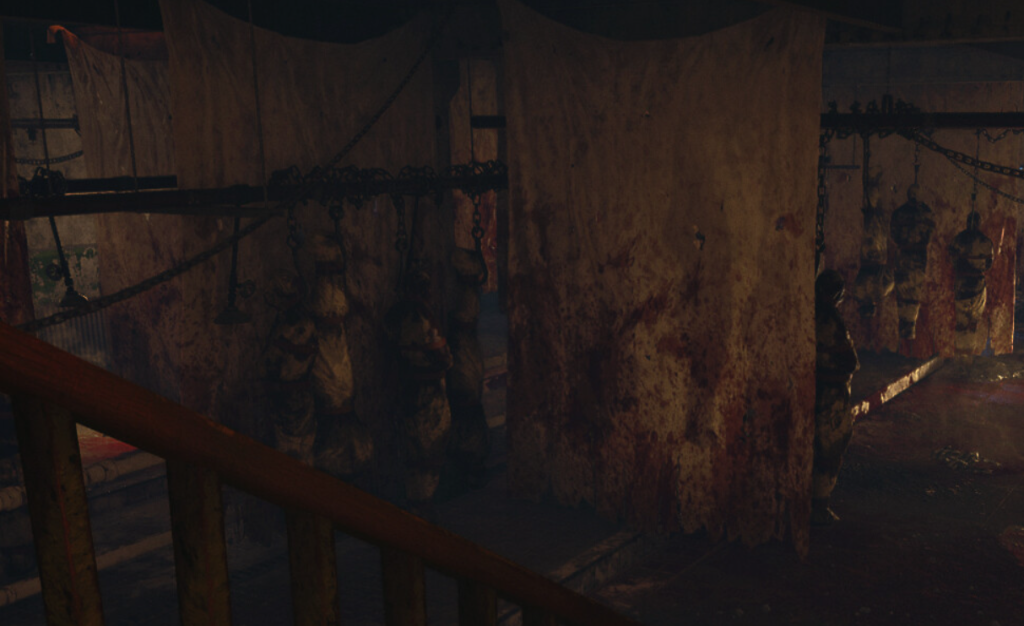
But I’ll share a piece of music with you. After listening, you might have a vague guess—or a label—for what you’re looking at.
Listen first. Wonder about it. Feel free to complain about why my screenshot is such terrible quality while you’re at it. (I did my best. Sob.)
No rush. I’ll come back to the music and the picture.
You can’t trust a single narrative element
OK. With that music playing over that image, you might tell me this looks like somewhere eerie and dangerous.
Fair enough. Bloodstained white sheets—it looks an awful lot like a hospital. Bodies wrapped in those sheets, chains suspending them, blood all over the floor, and some strange light just visible on the right.
We naturally draw information from our surroundings. Some people focus on details; others on the mood. Your brain takes it all in, quickly searches through things you’ve experienced or seen before for a match, and finally hands you a “definition.”
Meanwhile, the music keeps reinforcing that reading of the scene. At the very least, it suggests that the place might have something to do with Silent Hill—or “Mute Village,” as we affectionately call it.
But the picture actually comes from Blood of the Dead, a Zombies map in Call of Duty: Black Ops 4. And the overall experience of that map couldn’t be further from Mute Village.
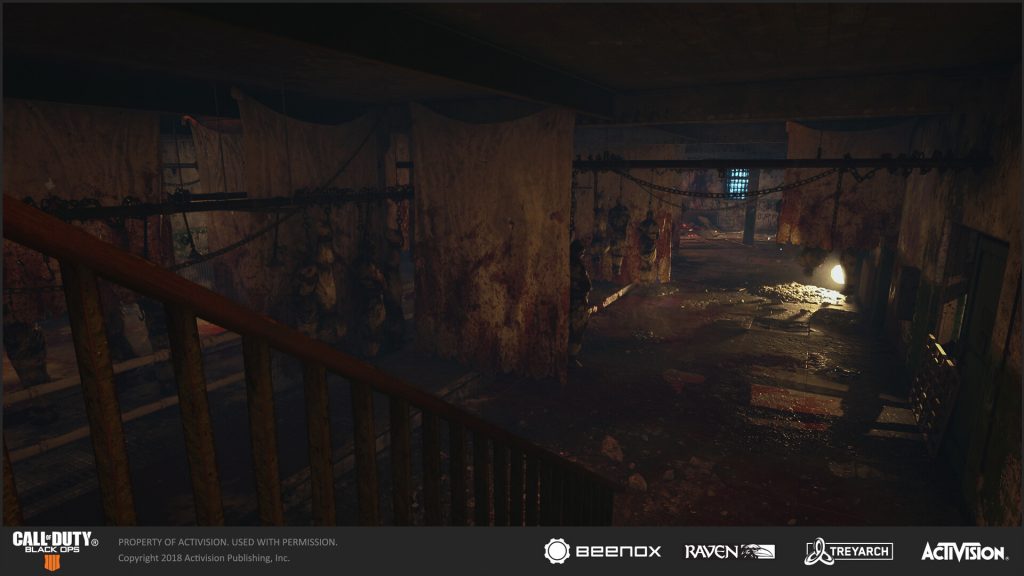
Once you’re in the game, fighting the Warden, you wouldn’t find it particularly frightening even with Akira Yamaoka’s “Promise” playing in the background.
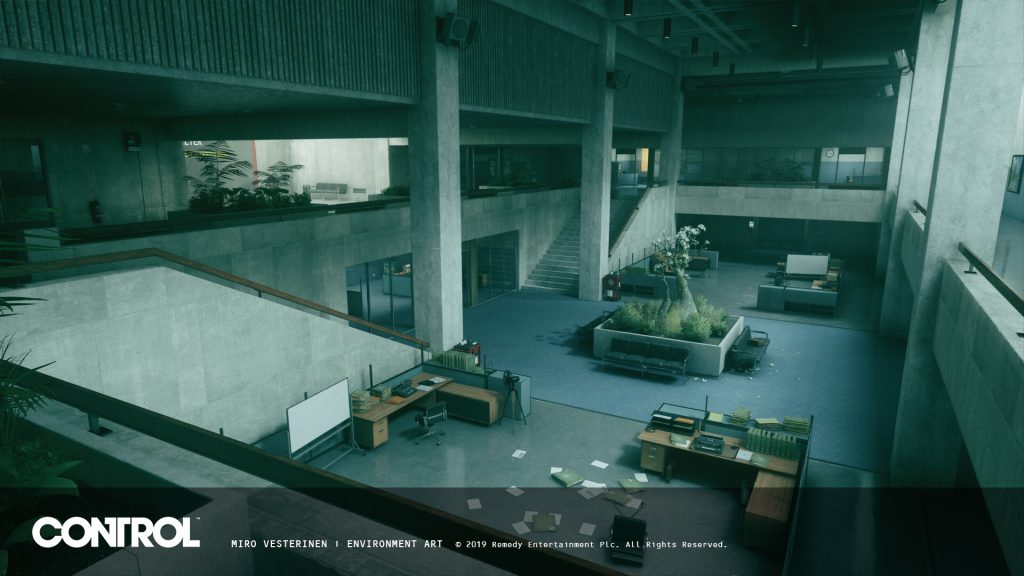
Likewise, if you don’t know what’s happening in Control, you probably wouldn’t find the environment in the screenshot above especially “unsettling.” Apart from the scattered papers, the dim offices in the distance, and the vague sense of oppression created by that enormous ring of concrete, of course.
That unease comes from an environment rich in narrative cues. It usually gives you a few things:
- An object carrying an emotional charge, placed at the visual focal point.
- A background environment that either contrasts with or reinforces that object.
- Unnatural divisions of space: too high or too low, too narrow or too wide, too symmetrical or too asymmetrical.
But you can just as easily use those conditions to create an environment that suggests the exact opposite of what you intend to convey. Keep the player uneasy, deceive them, then break the tension and reveal that it was a joke.
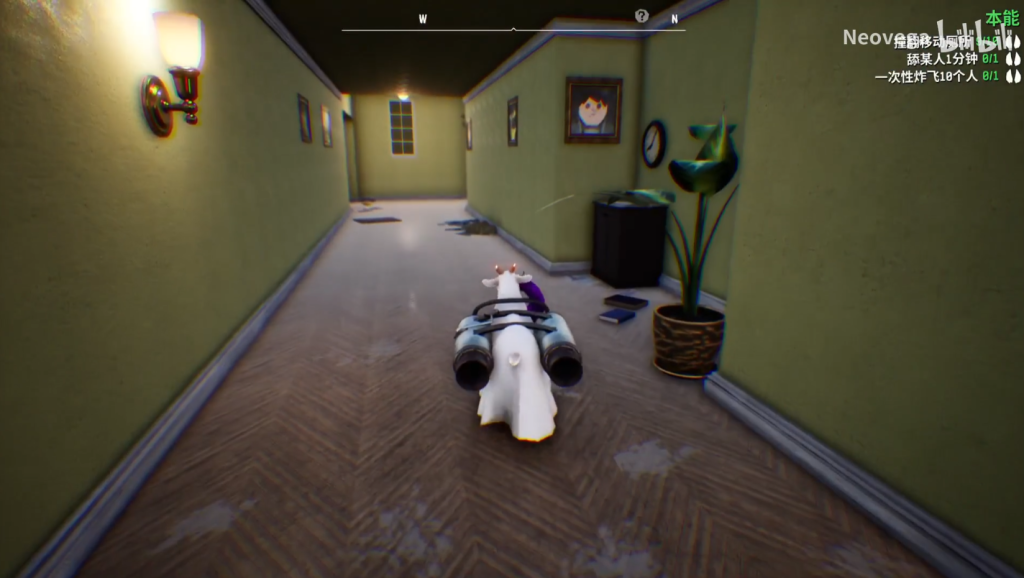
Like the P.T. Easter egg in Goat Simulator 3.
Then why do we depend so much on the environment?
Let’s come back to the question. When we think a game’s narrative is being conveyed through environmental storytelling, is environmental storytelling itself really what we’re relying on?
Take the GDC 2010 talk What Happened Here? Environmental Storytelling, by Matthias Worch, a level designer on Unreal II, and Harvey Smith of Arkane Austin, creative director of Dishonored: Death of the Outsider.
Throughout the talk, they keep returning to one concept: player identity. Who the player is within the game.
Even back in the days of tabletop Dungeons & Dragons, the player was still the game’s “big Other.” You observe a character in the game world, or take on an existing character’s role. Through your mind and your controller, you make that character experience one event after another. Those events eventually form a story with a beginning and an end, which in turn entertains you, the player watching from outside it.
For these two developers, environmental storytelling needs several conditions if it is to engage the player and make them forget the controller and the screen:
- Constrain the player’s movement through physical properties and ecology.
- Use the player’s frame of reference to communicate the simulation’s boundaries and affordances. (The original wording is “Uses player reference to communicate simulation boundaries and affordance.” I’m not sure I translated that into Chinese correctly. Haha.)
- Reinforce and shape player identity.
- Provide narrative context: explain what is happening in the story.
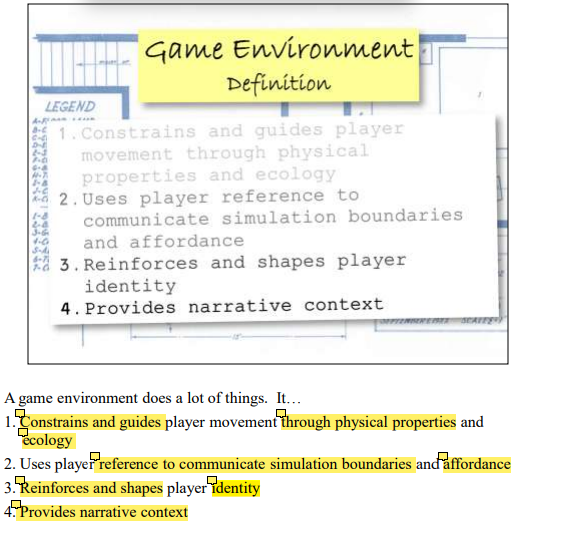
In their account, environmental storytelling gives players part of their identity. It reinforces their sense of who they are in the game world, so they experience the game according to the social rules and standards of that role. That identity is determined partly by player behavior shaped by the environment, and partly by the character’s own context. The environment keeps encouraging players to interact with it while also regulating their behavior.
This process of identification is called “The Imago Effect.” The term originally refers to an unconscious mental image in psychology, shaped by our surroundings and our family and social relationships. In Harvey Smith’s usage, it concerns the player’s experience of the character they inhabit: the emotions and identification that arise as they follow that character’s social rules within the game world.
Narrative doesn’t create the identity. It gives it to the player.
Although environmental storytelling is fundamentally about reinforcing the player’s identification with their role in the world, the character’s identity isn’t actually supplied by the environment—or by the narrative designer. It belongs to the writer’s remit.
Which brings us to another question: what exactly is the difference between a writer and a narrative designer? Let’s put up a simple comparison.

Writer / worldbuilding writer
- The character’s traits and background.
- What happens to the character.
- The character’s lines.
- The character’s actions.
- The background of the world the character inhabits.
- Whether the character’s behavior is believable in that context.
Narrative designer / quest designer
- The player’s emotional experience.
- The complexity of the sequence.
- The choices available to the player.
- The player’s immersion in the sequence.
- The believability of the environment.
We all understand that a screenwriter normally constructs a film’s script. That includes the period the character lives in, who they are, the adventures ahead of them, and the changes in their character arc.
Together, those things establish the character’s identity. They give the character a world to exist in and a role to occupy. That role tells them which rules they must live by, and defines the consequences of breaking them.
A narrative designer or quest designer doesn’t need to create that identity, decide the character’s personality, determine how they change, or invent their adventures. Their job is to let the player—that outside “Other”—inhabit the character, creating a connection between the two. First, you establish the player’s identification with the character. Then you maintain it.
Usually, someone willing to play your game will voluntarily follow its rules. I mean rules in the broad sense here: they’ll play the role and experience the story as intended. They’ll actively take on that character. Your responsibility is to the player: tell the story in a way that makes them want to play the role, and do so with enthusiasm.
Seen in that light, narrative design involves much more than telling stories through environments or little scene details. It is work across many systems and stages of production, with a hand in all kinds of content. UI, the player’s combat abilities, rendering, art direction, quest flow, scene staging, level design, systems design—even the combat and gameplay design that directly shapes how players interact with the world. All of these can affect narrative design.
So, for me, a good narrative should have:
- A very clear narrative goal or theme.
- Gameplay and interactions planned around that goal or theme.
- A complete, internally consistent script and story background, without contradictions.
- A few clever tricks for telling the story. Techniques, if you prefer.
- A reason for players to stay curious and want to learn, try things, and experience the game—a drive that keeps them immersed throughout.
- A narrative goal that directly benefits the player, conveying emotion, content, story, a theme, something to think about, or an experience.
When we say a game’s narrative has a problem, we usually mean it hasn’t let the player properly inhabit their role. Maybe the script is awful and gives you no reason to trust it. Maybe the level sequence is so tedious and drawn out that you’re sick of it. Maybe combat has almost nothing to do with the character. Underneath it all, these designs have broken the sense of identity the game established for the player.
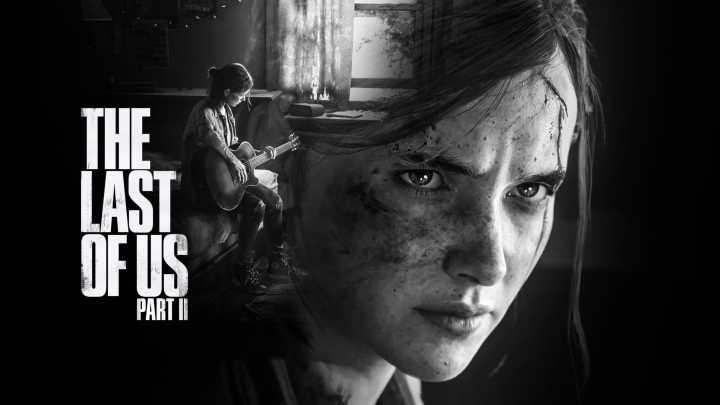
Of course, you might point to games that use meta devices, or that question whether a game should define an identity for the player at all, given the player’s part in driving its narrative. But take the broader view: isn’t “the player” itself an identity in those games? If “player” is the identity the game assigns you, then its narrative design still follows the same principle: take responsibility for the player’s experience.
So what can you do as a narrative designer?
In commercial games, both in China and elsewhere, narrative design is still caught up in a kind of mystique around the clever tricks used in film and literature. From my own experience, a narrative designer capable of meeting a project’s needs should be able to command thunder and lightning. Kidding.
You might have one skill you’re especially good at. Perhaps you’ve worked on film storyboards, or directed films. Or perhaps you come from screenwriting or game writing, and can at least understand what the project’s writers have put into the script. After all, if you can’t understand the script as the narrative designer, you can hardly expect the player to.
On top of that foundation, you’ll need to understand:
- How to design a quest sequence, for a game with linear content.
- How to bring the fiction into the game, for a game with nonlinear content.
- How to help the level art team build an environment that is completely believable within your game’s world.
- How to help gameplay designers design the abilities players can use during the experience.
- How to design the player’s pacing curve, for a game with linear content.
- How to help level designers build a linear level experience—or, for quest designers in China, design an entire questline.
- How to optimize the things your narrative uses for the project’s current needs: organizing and optimizing environment assets, for example, or optimizing how quests are presented.
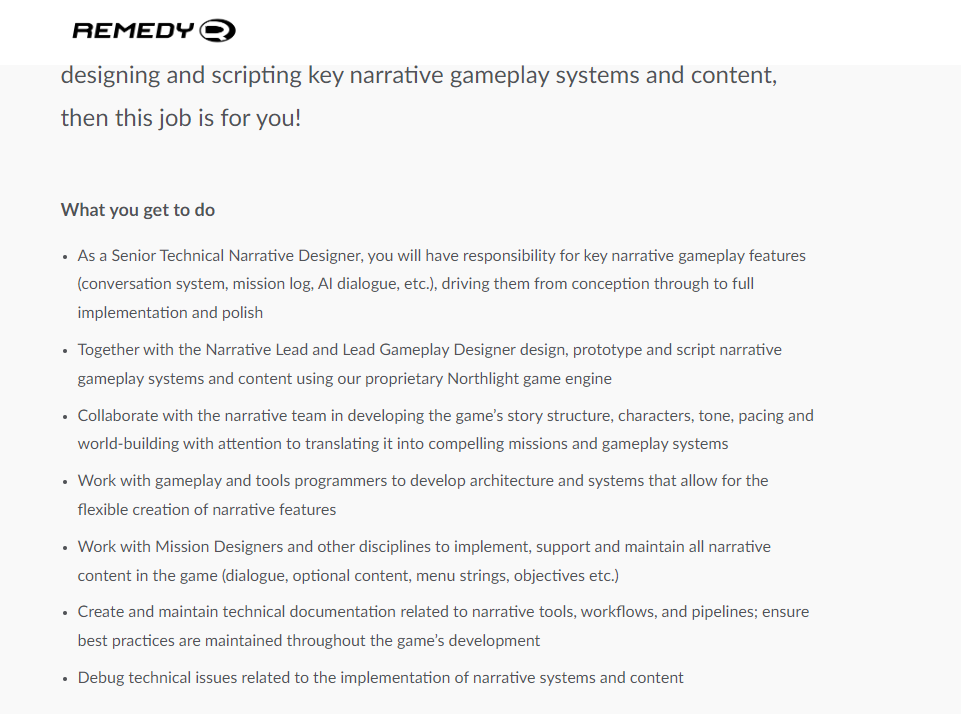
Yes. As a narrative designer, what you need to oversee is often the part of the project presented to the player. You don’t necessarily need to concern yourself with client-server interactions or the underlying code for a feature. But you do need to know how to keep the features your narrative depends on working properly when something goes wrong during play.
That means you may end up working with all kinds of engine tools and systems:
- Timeline / Sequence editors.
- Level logic editors, such as UE4’s Level Blueprint.
- Animation systems.
- AI pathfinding systems.
- Engine tool development.
And if your project doesn’t have good tools, the ones you use most will probably be:
- Excel. (Bitter laugh.)
- Lua / C++. (Bitter laugh, twice.)
For narrative and quest designers in China, where the field is still in what you might call its “dark ages,” you’ll probably also need to help design a dedicated quest editor toolset. In that case, you’ll need to understand a few more things:
- How the server and client interact. In practice, this means understanding an engineer’s warning that a feature might break after a disconnect and reconnect, or after the player changes scenes.
- How quests are configured in your project, and which parts of the game a quest sequence needs to call on.
- Which gameplay elements need to be connected to the quest.
- How to use tools for explicit and subtle player guidance.
- How to break down the story proposals supplied by the writers.
- What the project’s current selling points are, and what support the editor needs in order to deliver them.
All of that is a practical approach I’ve pieced together from the projects I’ve worked on and the direction I’ve taken myself. It won’t suit everyone who wants to go into narrative design. For me, the real golden rules are these:
- Never rely on a single clever trick.
- Always keep your design requirements reasonable.
- Always put the design goal first.
- Always keep the content believable within the game’s world.
- Always watch how systems affect one another when they coexist.
As in the example I started with, environments, sound, quest flow, dialogue—none of them can guarantee that your narrative will remain believable. Always assume that a player might turn the sound off, set the graphics to their lowest quality, and mash through every line of dialogue. Even under those extreme conditions, they should still be able to get the experience you’re trying to give them. And when all those elements are present, the experience should be at its best.
You need to prepare as thoroughly as you can for the narrative you want to deliver. You can’t assume a device is useful just because another game relies on it heavily. Nor should you abandon something simply because it didn’t work well on another project. This is a fight against treating past experience as universal law. As with level design, you can arrive at sensible design requirements only by continually playtesting and working through your design on paper.
To protect the experience, the design goal has to come first. It is what the player should encounter immediately in the narrative experience you’ve made. If your narrative design is vague and keeps changing its mind, you can’t guarantee a consistent, comfortable experience for the player either.
All of this is meant to make the whole game world believable enough for the player to become immersed in it. But while meeting those needs, you also have to refine the flow. Too many design beats will slow the game down; put in nothing, and the pacing becomes too brisk and shallow, with all the flavor of plain water.
In short, the central goal is still the same: take responsibility for the player’s experience.
…Ideally.
Afterword: Zen and game narrative design
A level designer needs to make a level fun, make sure there are no confusing spots, and keep oddities in the environment from allowing players to do things that undermine the design goal.
That sounds… reasonably controllable? Apart from the difficulty of quantifying “fun,” at least.
A narrative designer, meanwhile, has to keep the player immersed throughout the game. Nothing else in the game should feel at odds with its world. The player needs to perceive the writer’s story as intended, while the other gameplay elements and systems still get their chance to contribute to the experience.
It’s like a designer with ten years in the industry listening to a fresh graduate explain “what flow is.” Full of mysticism and uncertainty.
As for me, I’ve always said I’m still trying “to be a good narrative designer.” I’m confident in the many tricks I know for quest flow and level design. I can offer measurable standards that keep a sequence at a consistent level—somewhere around a 60 or 70 out of 100.
Games have also grown a great deal over the last two or three decades. First we relied on manuals to provide narrative and a sense of role-playing. Then people started experimenting with cinematic and scripted storytelling. Real-time cinematics and QTEs raised the level of immersion. And now we have the overuse of cutscenes and animated dialogue scenes.
A few days ago, I was marveling at how World of Warcraft‘s scripted storytelling achieved a sense of role-playing in an MMO under extremely restrictive conditions. A few days later, I found myself thinking that putting camera scripts and character animations into a dialogue scene was much cheaper than painstakingly building heaps of script logic for environmental storytelling.
Nobody can claim to have game narrative all figured out. We haven’t reached its limits. Tomorrow, someone might release a game that tells a story in a way nobody has tried before, leaving a roomful of narrative designers saying, “Wait, you can do that?” Even then, others will keep following the paths their predecessors have opened, looking for richer and more interesting ways to design narrative in games.