Creating a “Chain Reaction” — An Attempt to Discuss Quest Structure and Systems
A good quest is like a nuclear explosion: its astonishing force and aftermath burn themselves into your memory.
Intro
Sometimes I get stuck on a question: why do different projects, with different styles, produce so many distinctive quest systems?
Usually, our understanding of what makes up a quest goes little beyond “who, does what, how, and what happens afterward.” Put that into a system framework and you have three broad modules: the conditions and relationships that govern acquiring quests; quest chains and Tasks; and what happens after completion.
Yet the more distinctive a project’s gameplay and mechanics, the more likely it is to have a quest style of its own. When we refer to other games in discussions, we’ll casually say, “This quest feels a lot like something from such-and-such a game.”
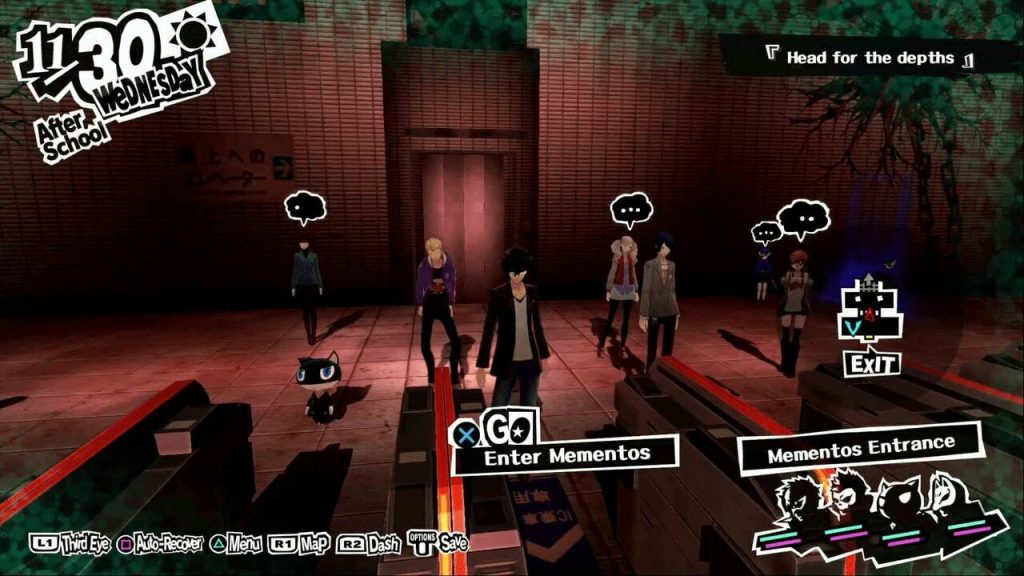
But if the modules and components used to build quests are basically the same, how can there be such a thing as “quest style”? What makes quests differ from one game to another? I’d like to explore that briefly in this spur-of-the-moment article. It’s also another chance to take stock of my recent work.
Objective? Target? Should a quest really be a to-do list?
From the perspective of configuration and design, a quest usually begins when the server issues a Task ID to the player.
Once the player receives that Task ID, the quest is already underway. Its assets begin loading into the game. The NPCs you can interact with spawn. Objectives appear on the HUD and map. The quest tracker displays the current quest’s name and text. Notice something? The player hasn’t actually interacted with the quest yet, but an objective belonging specifically to it has already jumped to first place on their “Top 100 Things to Do.”1
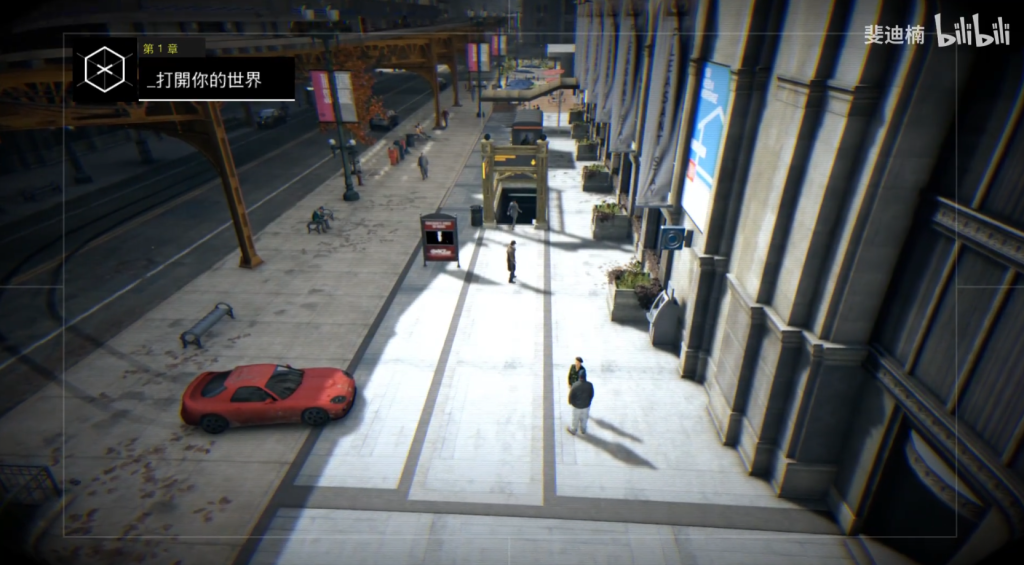
The original Watch Dogs even has a transition when you enter a mission. The screenshot shows the Act I mission “Open Your World.”
From a design perspective, unless receiving the Task ID forces the player straight into the quest, we call this preliminary phase—before interaction actually begins—the quest’s setup phase. Usually, we don’t want the player to see assets spawn only when they’re needed. An NPC suddenly appearing in your face, for example, or unrelated quest NPCs and other little darlings who get in the way only being hidden when you begin an interaction.
But this brings another problem. As work the player has to complete, objective-driven quests create an extremely strong to-do-list feeling. Open your quest log and find a dozen quests waiting for you to go and start them: of course players get fed up. Even the designers debugging quests during test passes know the feeling. You open the GM tools, see the enormous list of Task IDs attached to one account, and immediately think, with mounting irritation: “Overtime again tonight.”
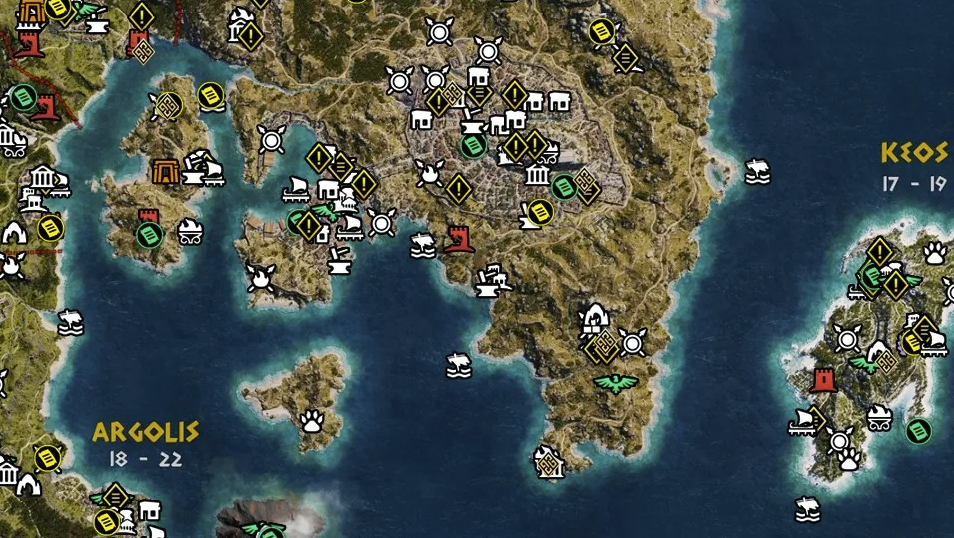
Icons all over the map.
Personally, I always want quests to unfold quietly, almost without you noticing. The setup phase shouldn’t feel like “here’s what you need to do.” It should feel like “hey, something’s about to happen. When you’re ready, go over there and get it started.”
Unless, of course, the player and I have already reached an understanding: whenever I put a particular icon on the map or add an entry to your quest log, you should recognize that you’re now in a quest. But that’s a ritual in itself, shared between the player and the quest system. When the player accepts a quest, the accompanying presentation tells them, “I’m in a quest now.”
That may be fine in an MMORPG framework. But in a linear game focused on immersion, the player is already in a quest. Surely we can’t make them find an NPC with an exclamation mark overhead every single time?
So I’d like to divide the quest framework into three factors. Together, they form the structure of an individual quest, a whole quest chain, and even a game’s overall quest style.
Event: the situation
Generally, creating the feeling that “something is happening” isn’t difficult. Today’s games provide all sorts of examples.
A common approach is to have an NPC contact the player by message or phone. Something has happened, they say. They’re waiting for the player to come and hear about it.
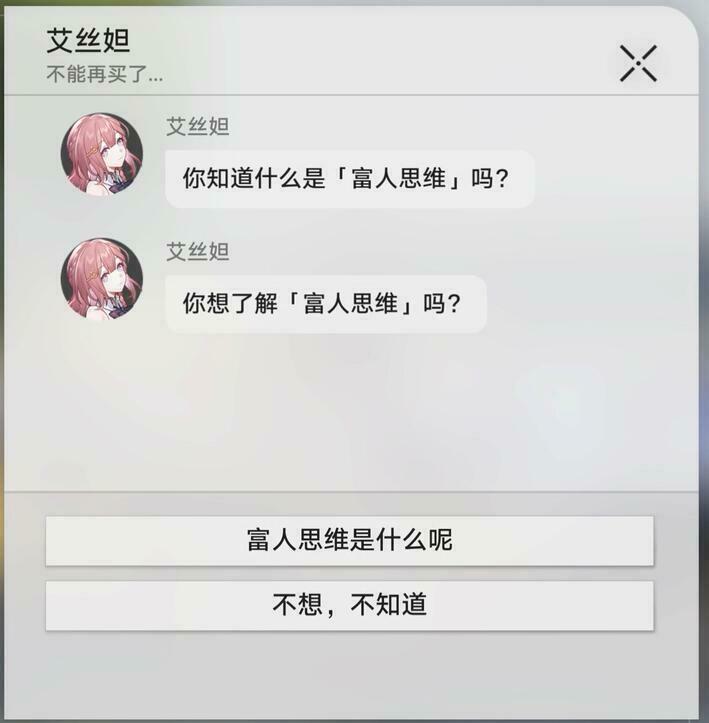
Asta’s messages in Honkai: Star Rail, translated from the screenshot: “Do you know what a ‘wealthy person’s mindset’ is?” / “Would you like to learn about a ‘wealthy person’s mindset’?” The replies are “What is a wealthy person’s mindset?” and “Don’t want to. Don’t know.” Her status reads, “Can’t buy any more…”
Messages can take many forms. Some games give the player a means of communication: a phone, a mailbox, carrier pigeons, Paimon… Once the player chooses to answer the call or read the message, the NPC describes something that’s about to happen, or is already happening. Afterward, the location mentioned by the NPC appears on the map. The player goes there and triggers the quest, either actively—by interacting with an NPC, an objective point, an entrance or a device—or passively, by walking into a trigger or entering a scene.
A slightly more advanced approach plays little tricks with the gameplay components the player already has.
For instance, in area A, a power cube runs a generator. Nearby is a room that needs a power cube to open, with a treasure chest inside. When the player uses an ability to remove the cube from the generator, an Event occurs. An NPC who was charging his Steam Deck inside the building runs out and curses the player: their actions have dealt a devastating blow to his democratic bug-extermination campaign. From there, a quest sequence can begin, with the player listening to the NPC and doing something for him.
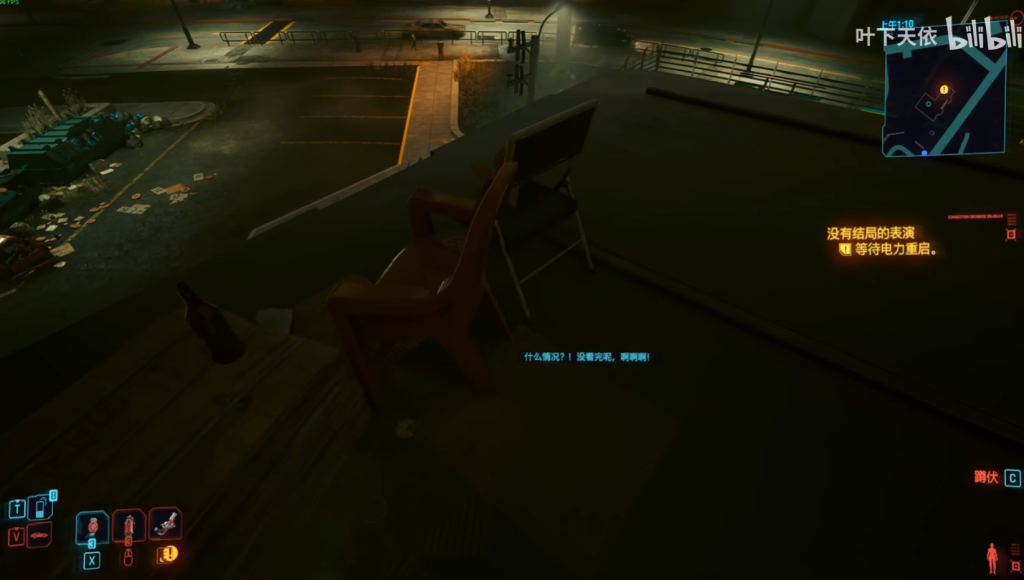
Something like the Lu Furen (陆夫人) Easter egg in Phantom Liberty. The mission shown is “Birds with Broken Wings,” with the objective “Wait for the power to restart.” The Chinese subtitle reads, “What’s going on?! I wasn’t finished watching! Aaaah!”
You can do something similar with the player’s other systems: affinity with an NPC, a morality score, even species, ethnicity, how much clothing they’re wearing, or their style of dress. Functionally, an Event like this just reads values from the relevant player systems as parameters, then triggers when its conditions are met.
Some Events go further, built into behaviors the player might undertake. Destroy enough objects, collect enough materials, complete enough challenges, or enter an area while in a particular state. Quests like these tend to be deeply hidden and closely tied to the world’s rules. For the player, they’re more like “surprises that make sense.” Act in accordance with the rules of this world—or violate them—and you receive a reward or punishment.
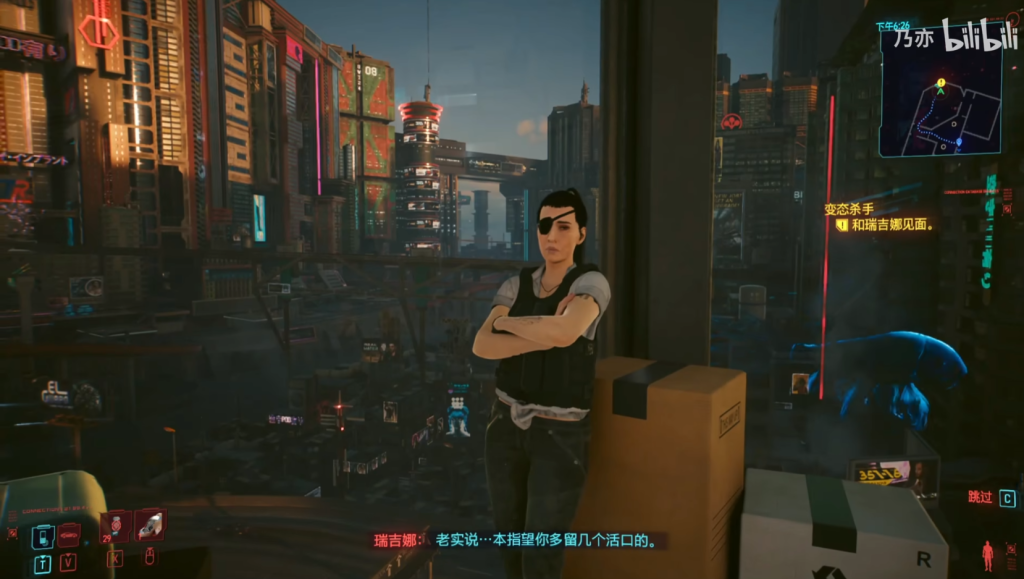
This isn’t a perfect example, but it gets the idea across: the scene unlocked after dealing with all the cyberpsychos. The quest shown is “Psycho Killer,” with the objective to meet Regina. Her subtitle reads, “Honestly… I’d hoped you’d leave a few more alive.”
The condition could even be met as soon as the player enters the game. Think about it: most tutorials drop you into a situation. The Event is already happening by the time you’re in it. When you wake up in that glass room at Aperture Science, for example, meeting GLaDOS and completing her challenges is a quest that has already begun.
Admittedly, as situations become more complex, they impose some limits on the player’s freedom. You may have to do things as soon as the player acquires a Task: teleport them somewhere, make them perform an activity, or have them finish reading your message. But the benefit is usually the same. Only when something has happened, or is about to happen, do people start thinking, acting, and doing things in response.
Players have no obligation to experience your quests just because they’re in your game world. An exclamation mark above an NPC, plus “It looks like NPC X has something to tell you. Go find them!” in the Current Task panel, doesn’t automatically make a player want to start. How you design and arrange Events becomes an understanding between you and the player. You can offer quests in keeping with it. Or, at some point, you can “reasonably” break that understanding and have the player act differently.
Action
In terms of type, the actions available in different games aren’t all that different.
We can divide common actions into a few categories:
- Pure interaction: go somewhere and press the interact or use button, including holding it while a progress bar fills; also, walk into an area.
- Presentation: an interaction starts dialogue, cinematic subtitles, a cutscene, and so on.
- Items: acquire an item and use, examine, or read it.
- Native gameplay functions: mainly noncombat ones here. Destroy an object, use a skill or ability near an objective point, scan the environment, view an Echo, switch time periods, take a photograph, and so on.
- Combat: defeat one or more enemies, with extensions such as protecting a target from destruction or fighting waves of enemies.
- Minigames: connect pipes, open a combination lock, solve a puzzle, complete a chase, and so on, and on.
These can be implemented in many ways. They can combine or connect with one another, and you can use branches to handle different Actions. Generally, though, an Action serves as a basic quest module. When it finishes, the task associated with that Task ID finishes.
This is usually a practical choice, learned from experience. If a player has one Task ID and must complete several Actions within it, every Action needs its own record of being created, in progress, and complete. You must make sure that after a disconnection, crash, or unintended exit from the quest, the quest can restart at the player’s current point of progress. Games such as Call of Duty also use checkpoints to record progress when combining multiple Actions.
But please note: an Action is not necessarily an objective.
An objective is essentially a concept presented for the player to understand. It usually guides them toward completing the current quest. But an objective can be complex—visit three places and complete three minigames—or simple: walk somewhere. Sometimes, to clean up assets created by the quest, or before performing an operation on the player—a fade to black, a teleport, a scripted sequence—we also use an Action that triggers on the spot as a transition.
Games usually develop unwritten rules for using Actions. “Decrypt” and “investigate,” for instance, can be minigames or simply hold-to-interact actions. Dialogue can lead into combat. But making the player finish a conversation, walk a few steps to fetch something, and return for another conversation can feel a bit like, “Are you taking the piss?” Similarly, receiving an item immediately after cinematic subtitles can feel abrupt. These choices are fundamentally about shaping the experience of the quest sequence, creating an impression that feels reasonable and fits the player’s understanding.
Effect
By Effect, I don’t mean “quest completion,” or “the next quest unlocked by completing this one.” I mean feedback in response to the player’s actions.
Usually, that Effect can encourage or guide the player. When they try to destroy an object, show them that it’s working. When they do something other than what we’re asking, promptly tell them not to continue.
But an Effect can do more than guide. It can establish atmosphere or develop the world. It can even shape and stir the player’s emotions.
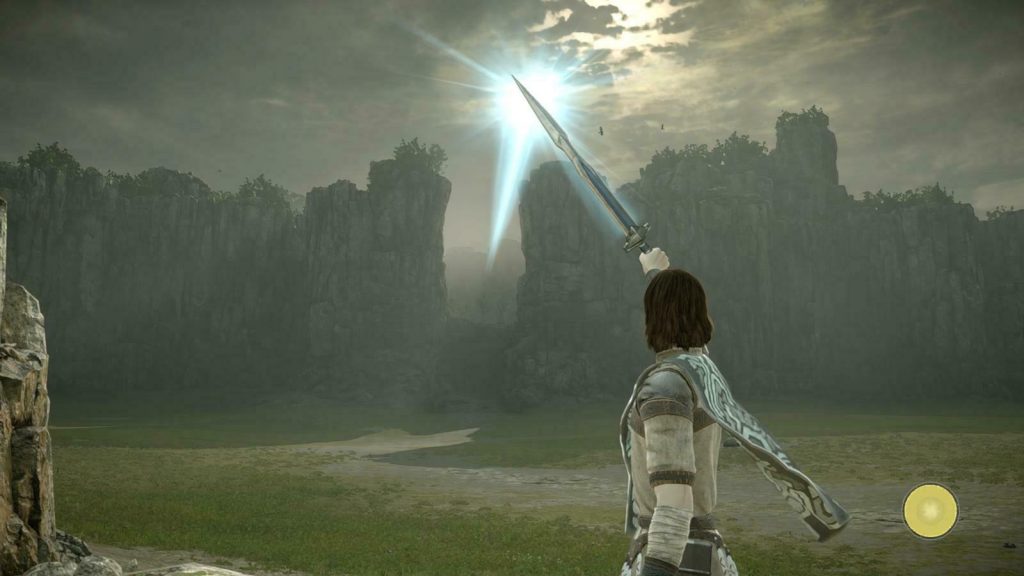
“The desire to save someone you love” → “redemption after being deceived.”
The Effect may be feedback from an action the quest asked the player to take. Suppose the player takes a photograph of an NPC as a keepsake. At a later, crucial moment, the photo might become an atmospheric prop that steers the player’s emotions. Or, at a critical juncture, it might change an NPC’s state, even turn an enemy into an ally or vice versa.
An Effect doesn’t have to happen immediately. While the player is doing one thing, an NPC may be acting on the world in parallel. Later, when the player encounters the result of those earlier actions in another quest, the game reveals the Effect: what the player and NPC did ultimately caused this outcome.
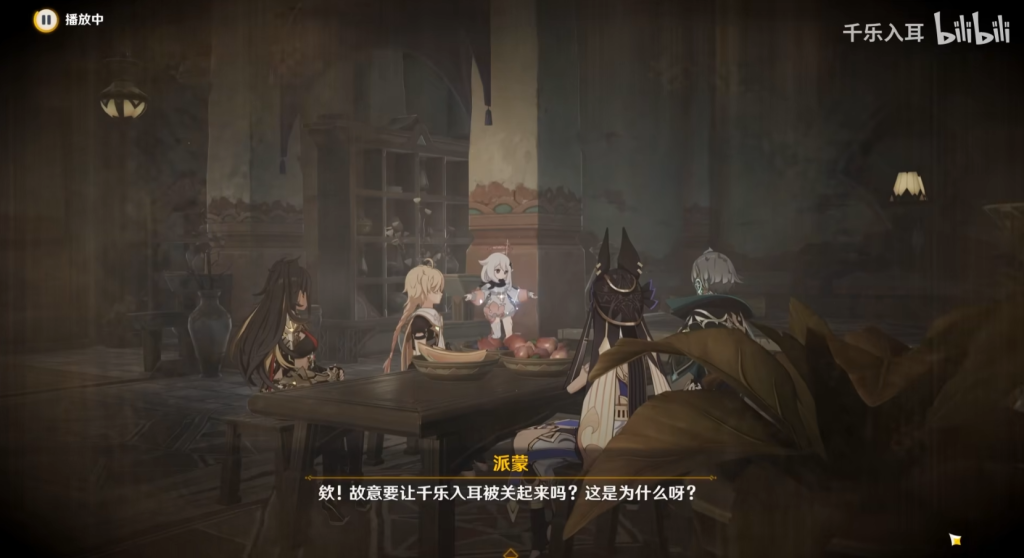
All right, I’m using Genshin Impact again… the assault on the Akademiya near the end of Sumeru’s main story. Paimon’s subtitle asks, “Huh?! You want [the Traveler] to get locked up on purpose? Why?” The original screenshot uses the player’s chosen name, 千乐入耳.
Effects can be presented with different levels of detail. In an earlier quest, the player and an NPC may discuss something, but the game deliberately glosses over the details. When the plan reaches a crucial point, it flashes back to that conversation and shows it in full. Only then does the player understand: this was the plan they made with the other characters, and they had a crucial part to play in it.
Within this idea of Effect, doing nothing is also a behavior. The player takes no action while something happens, and eventually sees something extra because of it. An Effect therefore isn’t tightly bound to the quest objective. It’s the result of behavior.
For example, imagine following a group of monsters to a sanctuary as they repeatedly kneel and prostrate themselves. Moved by their emotion, the player might choose not to attack and accompany them. Or they might interrupt, attack the monsters, and enter the sanctuary alone. The game can deliberately create a sorrowful mood that makes the player choose to spare them. If the player attacks, the combat music can turn mournful and desolate, making them realize they’ve done something wrong. Here, the quest acts back on the player’s emotions. That Effect can prompt them to behave differently in later quests, and have a different experience as a result.
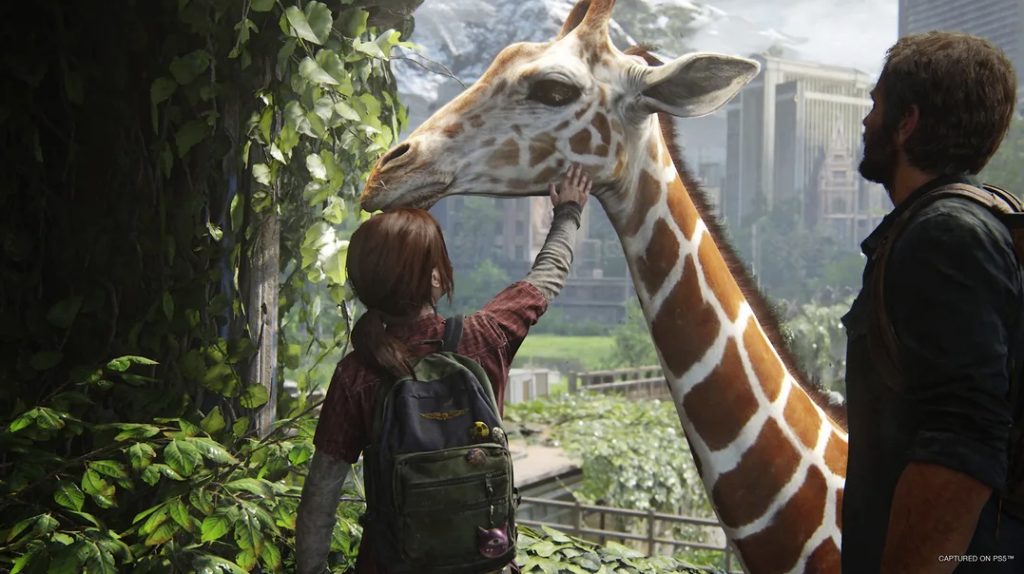
Other examples include the giraffe scene in The Last of Us, or the “moon landing” sequence in Part II.
As a designer, I personally think that considering player behavior also means considering all the Effects it might produce. We need to think through every possible response and keep the resulting Effects within a reasonable range as far as we can. This does more than keep the quest running: unusual player actions may disrupt its flow, or interrupt a sequence and cause a blocker. It also helps ensure that the emotions and themes we want players to inhabit are conveyed properly.
Chain reactions and quest style
To me, Event, Action, and Effect form the complete chain of a quest sequence. At the level of one Task ID, these three components affect what the player does and what results they can get. Across a whole quest chain, separating and recombining the three creates a quest’s “chain reaction.”
We can freely vary their order and proportions. If a quest begins with an Action, the player’s action itself creates a situation. Once that situation has been expressed, its Effects on the quest and player unfold. Likewise, if a quest begins with an emotional Effect on the player, they may take action of their own accord, or receive a situation through the narrative. Within it, they learn what comes next, take further action, and create new Effects.
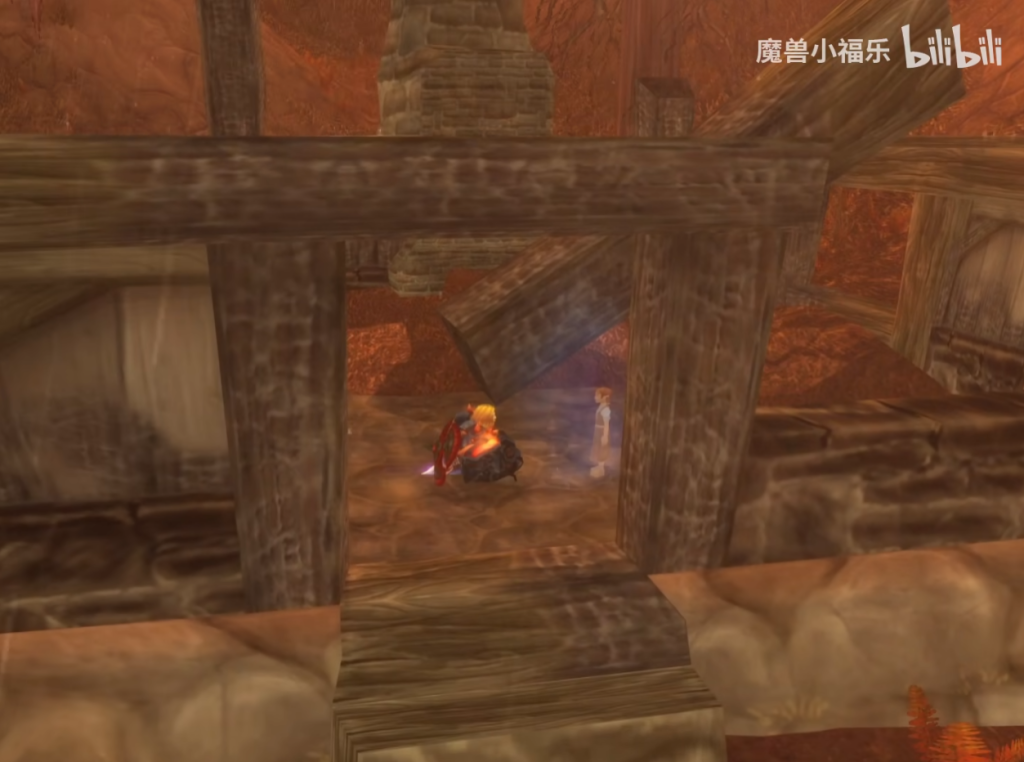
The fundamental purpose of this chain reaction is to create an experience as forcefully impressed on the player’s memory as a nuclear blast. It may come from an Event: little Pamela in World of Warcraft, where what stays with you is the spectral reenactment of the Battle of Darrowshire. It may come from an Action: the knife you throw at Shepherd at the end of the original Modern Warfare 2. Or it may come from an Effect: the emotions left by Joel having his head smashed with a golf club drive the player into a journey of revenge…
The combination of these three factors forms the basic style of a game’s quests. How you arrange them, adjust their proportions, and order them is what allows a game to distinguish its quest flow from other games and make its experience distinctive. When we say a game’s quests have their own style, we’re really talking about the character produced by these arrangements, across a sequence or within a particular part of it. The difference between quests in a silly game and a serious one, or between “playing a character” and “role-playing,” is expressed through this chain reaction.
Do you continue in sequence from what you’ve already established? Or suddenly break convention at a point that should be serious, using an unusual beat to cut through the prevailing emotional Effect? Do you let the player experience a character’s interactions through the design of Actions? Or does the character perform those interactions themselves, through cinematics and dialogue? Together, these choices form the game’s quest style, and the impression it leaves indelibly in the player’s mind.
Afterword
I haven’t been in this profession all that long. But I’ve always opposed dogmatically dissecting quest sequences by counting which mechanics appear, how many triggers there are, and how each trigger is arranged.
As designers, beyond a reference experience or the tone we’ve chosen for our own game, the best resource for judging a quest’s emotional pacing is our own experience of life and games.
The real world and your own experience will always be the best measure of a quest sequence. They tell you when something happening in a particular situation doesn’t fit the design, and when it feels true to life. Giving the right things the right amount of attention, making each part lead naturally into the next: these come from a designer’s intuitive understanding, formed by comparing lived experience with an imagined emotional or pacing curve.
That’s why I like to insist on this:
A good quest designer is often an absolute tyrant. They make almost unreasonable demands of every blade of grass and every tree, every NPC’s position and behavior, the timing of events, the actions available to the player, and the Effects any of those actions might produce. They insist on exactly when the appropriate UI prompt should appear, and when an NPC may speak to the player. Even the duration of progress bars and black screens, the player’s position, the camera’s position, the center of the composition… anything that might affect the player’s emotional experience becomes something they demand control over, like a greedy tyrant.
In this chain reaction formed around a quest, every module can affect how its emotions are expressed and how its style and structure change. Ultimately, each affects the experience we present to the player.
The Chinese original uses “Object” for 目标. Here it is rendered as “objective,” to distinguish a player-facing goal from a scene object. “Action” remains a separate concept.↩